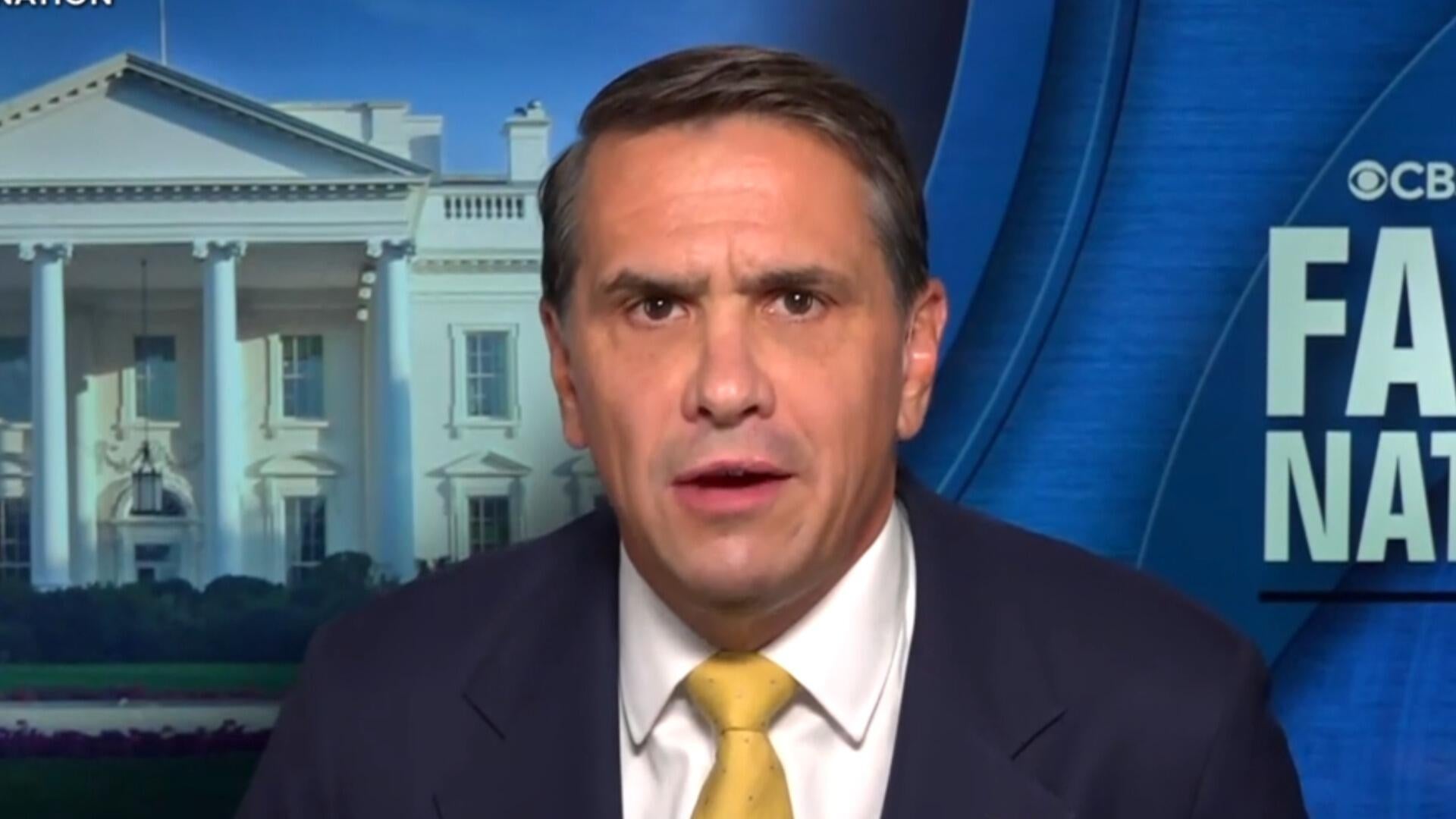
▶ Watch Video: Blanche refuses to say if Trump told DOJ to file Alaska Senate race lawsuit
Washington — The raid of Democratic Rep. Ilhan Omar’s home. The indictment of a prominent Virginia state senator for drug and bribery offenses. The charging of two ex-FBI officials with lying about their roles in the investigation of Hunter Biden.
The overt investigative steps that the Justice Department took on these three criminal cases just weeks before the midterm elections were once unheard of under past administrations, Democratic or Republican.
Former DOJ officials say Attorney General Todd Blanche’s Justice Department has entered uncharted waters in ways that could influence politics as voters cast ballots, in contravention of long-standing policies and practices.
“The practice and approach has been and should be that discretion is the better part of valor,” said Gregory Brower, the former U.S. attorney for Nevada under President George W. Bush. “If you don’t absolutely need to do something within 60 days of the election, the better practice was, for good reason, just don’t do it. If the evidence is there, it’s going to be there after the election.”
A Justice Department spokesperson rejected the criticism it has received about the timing of the cases, telling CBS News in a statement: “This Department is following the facts and the law, not anyone’s political timetable.”
A flurry of activity
The very public investigation into Omar involving accusations of immigration fraud, the drug and bribery charges against Virginia Democrat L. Louise Lucas and the criminal complaint charging former FBI counterintelligence officials Nikki Floris and Bradley Benavides with lying to Congress are just three examples of high-profile enforcement actions by the DOJ that are widely seen as red meat for President Trump’s political base.
Omar, whose home was searched earlier this month, is a longtime Trump foe who is running for reelection in her deep-blue Minnesota district.
Lucas was charged in an alleged scheme involving her cannabis business. As president pro tempore of the Virginia state Senate, she is one of the state’s most powerful Democrats and led an aggressive attempt to redistrict Virginia’s House districts last year. Her daughter, Lisa Lucas-Burke, was also indicted in the case and is currently running for election to the Portsmouth City Council.
And Floris and Benavides were accused last week of lying in connection to the FBI’s Hunter Biden laptop probe, a case that has long drawn Mr. Trump’s interest. Prosecutors attempted to add new charges to that case early Tuesday morning, but a magistrate judge tossed those charges and chastised the government.
This week, an FBI agent who helped investigate the pair revealed that the probe was launched at FBI Director Kash Patel’s behest, shortly after Mr. Trump gave a speech and ordered the Justice Department to launch an investigation into former counterintelligence officials.
Separately, prosecutors took steps this month to again charge former FBI Director James Comey, though the Justice Department has said the timing in that case is related to the statute of limitations, which was set to expire on Oct. 5.
The case marks the third time since last year that the Justice Department has sought to prosecute Comey for different crimes, in what Comey’s attorneys and many DOJ veterans say is vindictive.
Prosecutors also sought on Tuesday to indict former White House aide Cassidy Hutchinson over allegations she lied in her testimony about Mr. Trump to the congressional committee that investigated the Jan. 6 attack on the Capitol, though a grand jury rejected the charges, CBS News previously reported. If prosecutors had succeeded, the case likely would have been unsealed before the election.
A Justice Department official who would speak only on condition of anonymity said the cases involving Lucas and the ex-FBI officials did not run the risk of influencing the election, and called any suggestion otherwise “a smear.”
“Louise Lucas was charged with racketeering and a money laundering conspiracy. She is not on the ballot this year,” the official said.
“Investigating former FBI officials for alleged violations in federal law, who are not candidates for anything, has no bearing on any election,” the official added.
The Justice Department has also sued California to force the state to set aside 20,000 ballots it claimed may have gone to noncitizens, which a judge rejected.
It filed an unprecedented complaint seeking to block certification of Alaska’s Senate race if GOP Sen. Dan Sullivan loses, citing possible voter confusion over a second candidate named Daniel Sullivan.
It has also publicized dozens of arrests of who it said were noncitizens accused of voting in past elections, with announcements that have included photos and videos of the targets being led away in handcuffs by federal agents, even though most of the charges have been lesser misdemeanor offenses.
David Becker, who previously worked in the voting section of the DOJ’s Civil Rights Division and is now a CBS News contributor, said that some of the criminal cases and civil litigation taking place so close to the election is cause for concern.
“These are arrests and investigations that could have easily been put off until after the election or that could have taken place in the previous 21 months, but they waited until right before an election,” said Becker, who also serves as the executive director of the nonprofit Center for Election Innovation & Research.
“At a minimum it gives the perception of attempting to interfere with the election, and I think there is a very good argument that’s actually what the DOJ seeks.”
The department official told CBS News that none of its cases related to unlawful voting and registration run afoul of internal guidelines, saying they all relate to conduct from prior elections.
The Justice Department has long followed an unofficial, unwritten norm of not taking investigative steps or making public statements for 60 days before an election if those actions could potentially influence the race. That guiding principle historically has led the department to maintain a relatively low profile during that time period.
The 60-day rule was cited in a 2018 inspector general report that faulted former FBI Director James Comey for notifying Congress in October 2016 that the bureau had located additional emails related to Hillary Clinton’s use of a private email server. The watchdog called the move a serious error in judgment.
There are also several written policies and practices that are customarily followed during an election cycle.
The Justice Department Manual prohibits prosecutors and agents from timing their investigative actions in ways that may give an advantage or disadvantage to any candidate or political party.
If there is any question about how a DOJ action may be perceived, the manual calls on prosecutors to consult the Public Integrity Section — a specialized unit created in the wake of the Watergate scandal that is tasked with investigating and prosecuting the most politically sensitive cases in the nation.
That section, however, is a shadow of its former self after Trump-appointed Justice Department leaders gutted the office last year, leaving just two people left to staff it.
During past election seasons, the Justice Department’s Office of Public Affairs has also changed some of its usual messaging practices. That includes holding fewer press conferences, limiting press releases and determining whether to exclude quotes or comments from politically appointed officials in public announcements, said Peter Carr, a 15-year veteran of the office.
In addition, the attorney general customarily issues a memo on election-related sensitivities to DOJ staff, underscoring the need for discretion. Blanche, however, has not issued such a memo, multiple sources familiar with the matter confirmed to CBS News.
“If you look at the search of Representative Omar’s home, what in that case made it so urgent that they had to do the search now, versus after the election?” Carr said.
“DOJ leadership is taking unusual steps ahead of an election that ordinarily would not be taken under prior elections,” he said. “It just shows a completely different view of what they believe is appropriate now.”
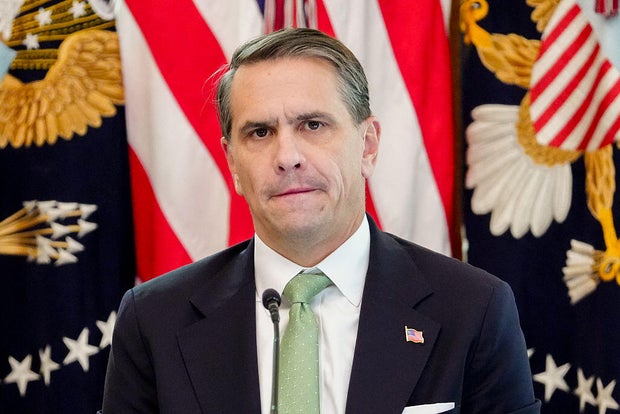
Blanche has downplayed questions about the timing of the Omar warrant and the Lucas indictment, saying they were not politically motivated or timed with the election.
The 60-day rule is “not part of the Justice Manual,” he told reporters at the press conference announcing the charges against Lucas, adding that the state senator was “not up for reelection” and it was “time to bring the charges.”
Former prosecutors said that the timing of the Justice Department’s actions could backfire in more ways than one.
For instance, it might hinder prosecutors from securing convictions because juries could question the legitimacy of the cases and whether they were brought for political purposes.
“The Justice Department’s power depends entirely on public trust. Voters need to believe charging decisions are based on merit and not on anything else. It’s why DOJ has long avoided overt steps close to an election, even in cases where the person involved isn’t on the ballot,” said Gregory Rosen, a former assistant U.S. attorney in D.C. who is now with the law firm Rogers Joseph O’Donnell.
“I haven’t seen the evidence in these cases, and some of the cases may ultimately hold up on the merits, but even a solid case now carries a stain.”
Brower added that the impact of the DOJ’s actions could also differ from what might be expected.
“It is possible by doing this it will have the opposite effect and it will actually bolster the candidate,” he said. “People won’t hold it against candidates who are indicted, but instead will hold it against the department, and as a result, the president’s party.”