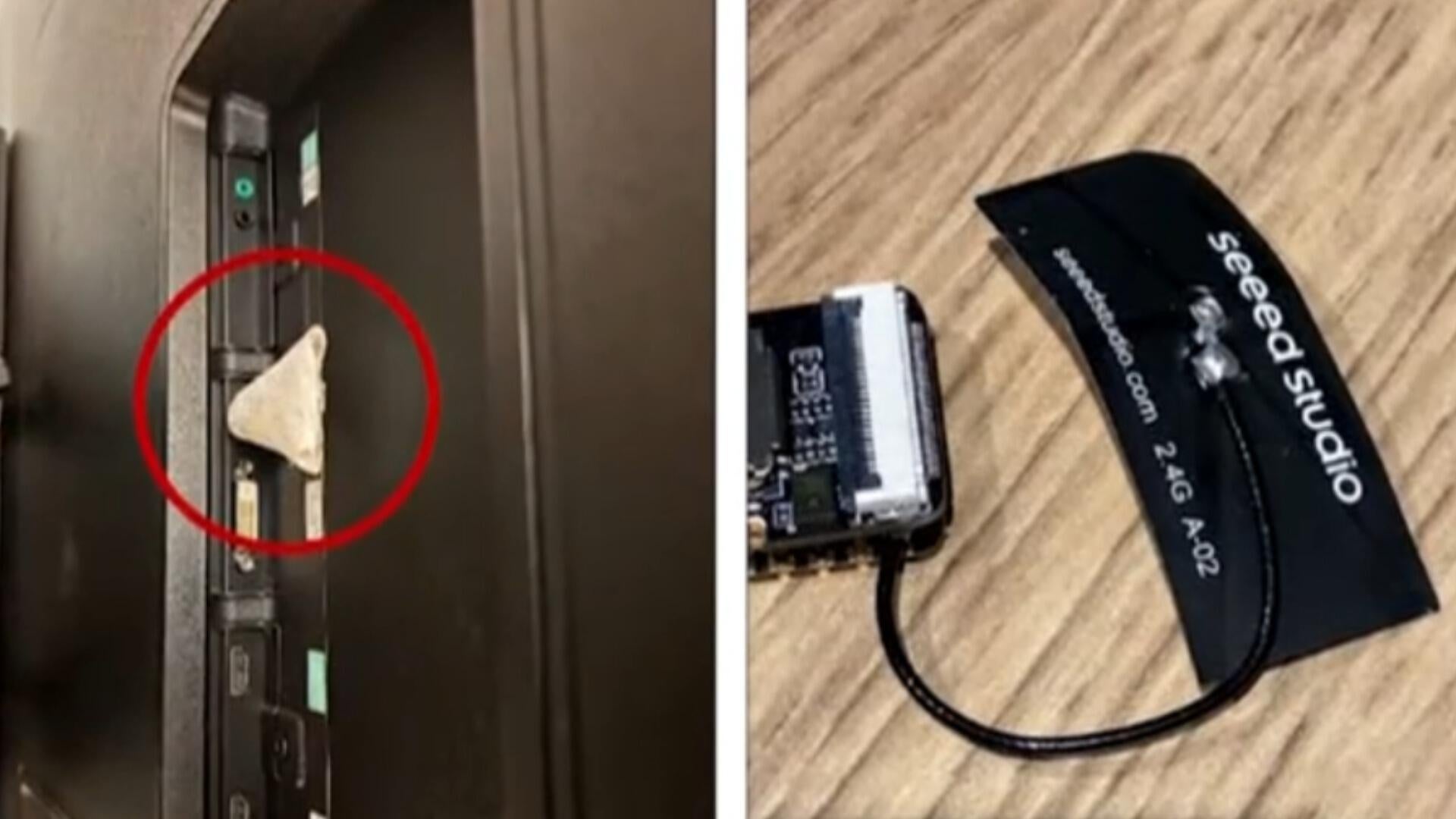
A former OpenAI engineer who allegedly installed a sophisticated listening device in an executive conference room was in close contact with a member of the Saudi royal family and was planning to leave the U.S. for Riyadh when authorities arrested him, federal prosecutors said Sunday in a court memorandum.
Abdulrahman Alfozan is accused of tapping artificial intelligence tools to help him develop encrypted recording devices and identify meeting rooms used by OpenAI executives, government officials and business partners.
The Saudi national earned an annual paycheck of $385,000 at OpenAI and received a $2.2 million equity grant when he first joined the company in July 2025.
In an 11-page filing, prosecutors wrote that investigators recovered evidence suggesting Alfozan may have planned to place even more devices inside OpenAI offices. Prosecutors also revealed that the suspect engaged in WhatsApp messages with an unidentified Saudi royal who repeatedly encouraged him to return to the kingdom and join a Saudi AI initiative.
The filing also shows photographs of other potential surveillance locations, internal searches concerning meetings between OpenAI and Saudi government officials, and notes suggesting he planned to take back the devices before leaving the company.
Investigators allege that on Sept. 28 Alfozan installed a “surreptitious audio recording device into a USB port on the back of a television in an executive OpenAI conference room, where the device remained for at least multiple days.”
Prosecutors allege that he “modified the device to prevent data transfer between it and the television into which it was inserted” and “had also encrypted the content stored on the device’s microSD.”
In the days before the device was installed, investigators claim that Alfozan used an AI chatbot account belonging to his wife to research how to customize the recording device, including how to: “build a continuous audio recorder,” “captur[e] microphone audio and save compressed WAV recordings to an SD card,” “improve audio and live listening,” “develop … speech-triggered recording,” “add browser access and controls” including “live listening,” and “encrypt the SD card” and “decrypt and recover recordings from the removed card.”
Meetings in that executive conference room, according to prosecutors, “frequently involve discussions of highly confidential technical, commercial, and strategic information, including proprietary research, as well as nonpublic information about OpenAI’s technical progress and strategic decisions, capabilities, priorities, government engagements, and commercial relationships.”
According to the filing, investigators determined that in the “days surrounding the time period that the device was installed, OpenAI executives met with government officials in that very room,” alleging the “defendant’s conduct could pose a danger to the national security of the United States.”
Prosecutors also disclosed that his cellphone contained photographs of at least one other concealed recorder as well as electronic equipment in other OpenAI meeting rooms.
Prosecutors allege that throughout 2025 and 2026, Alfozan “was in frequent communication via WhatsApp with a member of the Saudi Royal Family, including as recently as October 5, 2026.”
The Saudi royal, according to prosecutors, told Alfozan that an artificial intelligence initiative was being launched in Saudi Arabia and enticed him to join it.
“Saudi needs you more than [sic] the US!” the member wrote, part of a campaign to recruit the defendant. Alfozan agreed but said he wouldn’t leave until his stock vested.
The suspect was arrested October 9, three days before he was scheduled to depart San Francisco with his wife and infant son on a one-way flight to Riyadh, Saudi Arabia.
Instead, his wife and three-month old son left the country the following day on business-class tickets purchased by a Saudi military official, prosecutors allege. Before his arrest, the defendant had been scheduled to take two months of parental leave beginning in October 2026.
Alfozan, who has no prior criminal record, according to the filing, became a U.S. permanent resident in September 2020 and applied for citizenship thereafter. OpenAI fired him after his arrest. A detention hearing was scheduled for Monday, before U.S. Magistrate Judge Alex Tse.
The government has argued thatAlfozan should be detained pending his trial, alleging that his wealth, connections and apparent assistance from Saudi government officials put him at risk of fleeing the country.