DOC NYC, America’s largest festival for documentary films, returns to New York City and streaming for the 17th year, with screenings in Manhattan beginning Wednesday through Nov. 19, and continuing online through Nov. 29.
The festival includes more than 115 feature-length documentaries — many making their world, U.S. or New York City premieres — as well as short film programs, while the DOC NYC Pro Conference offers panel discussions and workshops in a variety of areas of nonfiction filmmaking and distribution.
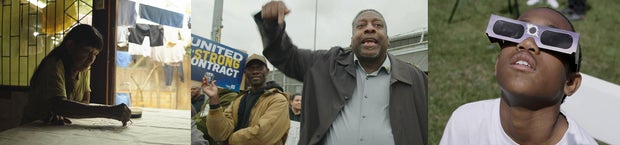
The festival’s opening-night feature is the American premiere of “The Hummingbird Paints Fragrant Songs,” about an Indigenous artist in the Peruvian Amazon who uses her art to advocate for her people and their land. The film won best international documentary at the São Paulo International Film Festival.
Barbara Kopple’s “Union Town,” the festival’s centerpiece, tells three stories of workers fighting for better conditions in the U.S. Kopple won two Academy Awards for her films “Harlan County, U.S.A.” and “American Dream.”
The closing-night feature explores our fascination with solar eclipses. In “Totality,” 21 film crews across the U.S. captured how the public embraced the 2024 total eclipse of the Sun.
See below for more highlights of some of the films screening at DOC NYC. There are also screenings of some of 2026’s most notable nonfiction releases, including “You Can See Everything,” “Once Upon a Time in Harlem,” “NAZA,” “Musk,” “American Doctor,” “Everybody to Kenmure Street,” “Nuisance Bear,” and “One In a Million.”
Check out the festival’s website for more program details, schedules, ticket and day pass information, and online screening availability.
Profiles
Among the personalities who are profiled in documentaries at the festival are:
- Singer Darlene Love (“Darlene Love: I Know Where I’ve Been”)
- Film director David Cronenberg (“The Flesh And The Soul”)
- Rock star Chrissie Hynde (“Pretenders”)
- Women’s soccer star Megan Rapinoe (“Rapinoe”)
- Veteran music critic Robert Christgau (“The Last Critic”)
- Cconcert pianist Emanuel Ax (“All the Music In the World”)
- The Chicano rock group Los Lobos (“Los Lobos Native Sons”)
- Oscar-winning cinematographer Robert Richardson (“Robert Richardson: The White Devil”)
- The creator of Mad Magazine (“The Mad World of Harvey Kurtzman”)
Environment
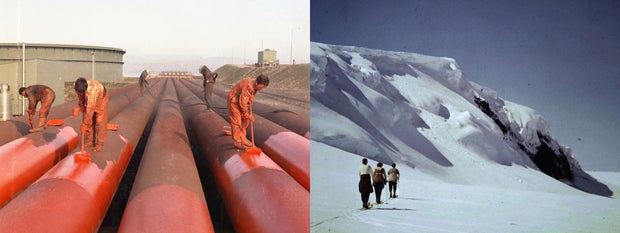
Using archival footage and interviews, “Whiddy” recounts how the community on a small Irish island was affected by the construction of a Gulf Oil terminal for supertankers in the 1960s, leading to numerous oil spills and an oil tanker explosion in 1979 that killed 50 people.
Aided by archival footage and photos, Icelandic poet Andri Snær Magnason creates a time capsule of Iceland’s melting glaciers and their importance to his family in “Time and Water.”
In England, two neighboring farmers are each determined to use their land differently – while one farms with traditional methods, the other turns to rewilding – in “Derek vs. Derek.” “Neighbours of the Beast” examines the impact of the inhabitants of the Indian city of Panna on the tiger population of nearby forests.
“Understory” uses macro imagery, animation and time-lapse photography to study the extraordinary intelligence of plants. In “Materia Prima,” Bolivia’s vast lithium reserves draw the interest of outside developers, augering yet another form of colonialism in South America.
Art and music
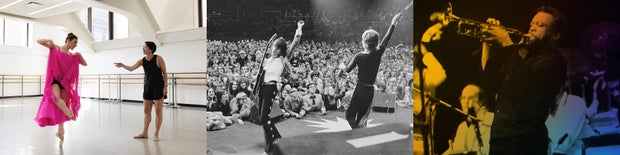
Jazz trumpeter Marcus Belgrave (1936-2015) was a force in music for more than six decades, supporting stars and mentoring gifted young talent along the way. Multitudes of musician-fans offer their praise in “…And Damn, He Could Play: The Marcus Belgrave Story.”
Photographer Ethan Russell always seemed to be in the right place at the right time, which allowed a young American in England to obtain unique access to The Beatles, The Rolling Stones and The Who, as well as myriad other rock stars. He tries to explain his great luck in “Let It Be, Let It Bleed: The Unlikely Rock n’ Roll Journey of Ethan Russell.”
In 2021 singer-songwriter Beldina Odenyo died tragically at age 31. “Bel” explores the traumas that affected Odenyo, her family’s grief, and the determination of her sister, Leah, to complete the unfinished album that Odenyo left behind.
“Make Work” delves into the creative process of dance, following choreographers at the New York City Ballet’s Choreographic Institute. Experimental filmmakers Nathaniel Dorsky and Jerome Hiler explain their hands-on approach to capturing the ephemeral nature of life on celluloid in “Illuminations.”
“Frida: The Girl Just Doesn’t Go Away” asks, how did painter Frida Kahlo become a global brand? Cuban artists resist censorship and state repression in “#SOSCUBA.”
Addiction helped derail a promising opera career for singer Tim Blevins. “Figaro Up, Figaro Down” follows Blevins as he uses his talent to survive on the streets.
Social activism
Puerto Ricans in small fishing boats mount resistance against the U.S. Navy’s occupation of Vieques in “Zenón and the Rebel Boats.” In 1970s and ’80s Los Angeles, feminist artists challenged the art world. How they fared is covered in “Acting Like Women.”
“A Better Way: James Lawson, Architect of Nonviolence” tells the story of The Rev. James Lawson, a colleague of Dr. Martin Luther King Jr., who preached faith and nonviolence in fighting racism, police violence and Apartheid. Crusading lawyer Lee Merritt dedicates his life to advocating for the families of Black Americans killed by the police in “Enough.”
Following the 1968 assassination of Martin Luther King Jr., Iowa schoolteacher Jane Elliott devised the “Blue Eyes/Brown Eyes” exercise to help her students see the cruelty of racism. That lesson earned Elliott much blowback, and stiffened her resolve to combat racism, as shown in “Jane Elliott Against The World.”
In the 1960s, a group of filmmakers and journalists came together to document the counterculture movement as a counterpoint to mainstream media. Their work is chronicled in “The Newsreel: Characterization of Subversive Organization.”
Health and Medicine
Emma Fogarty, who lives with a rare and painful genetic disorder called epidermolysis bullosa, teams up with a friend, actor Colin Farrell (who is battling personal demons of his own), to run the Dublin Marathon together, in “The Slightest Touch.” An advocate fights for women’s healthcare in Venezuela in “The Cord.”
In “The Sickling,” a man undertakes an experimental stem cell treatment for his pain-inducing sickle cell disease. In “Under Fire,” an Idaho fire captain treats the PTSD of the mental strain from his harrowing job with experimental ketamine therapy.
Technology
“MySpace” makes a nostalgic trip back to 2003, when MySpace was the prototypical social media platform before Facebook, Youtube, Instagram and TikTok, and at one point drew more internet traffic than Google’s home page. How far has social media come since? Where did MySpace go? And is it coming back?
“The Sandbox” examines how ubiquitous surveillance systems and military technology are used to control the global refugee crisis, with life-or-death consequences.
Exposés
Historical and archival investigations of challenging stories include “Primetime Preacher$,” about how Jim Bakker, Jerry Falwell and Jimmy Swaggart turned their evangelical ministries into media giants and founts of political power.
“The New Extinction” digs into the dinosaur fossil industry, where paleontology confronts commercial bone hunters and wealthy buyers.
How do flat-earthers and alien truthers come to their versions of reality? “Gimme Truth” introduces us to some colorful conspiracy theorists.
Justice
DOC NYC will debut the first two episodes of the Amazon Prime miniseries “The Boy Who Stole Billions?,” about cryptocurrency fraudster Sam Bankman-Fried.
“An Eye For an Eye” examines the legal system in Iran, where a woman convicted of killing her abusive husband must make a blood money payment to her husband’s family to avoid execution. But will they accept?
In 2020 in Hungary, under pressure from Viktor Orbán’s far-right government, 80 journalists from the independent newsroom Index.hu resigned in protest — and then picked up their cameras. “80 Angry Journalists” is the result.
The weaponization of non-disclosure agreements is examined through the stories of three people who face retaliation after breaking their NDAs meant to silence them about accusations of rape, racial discrimination and corporate crimes, in “My NDA.”
Following his death in 1994, singer, songwriter and holy teacher Rabbi Shlomo Carlebach was posthumously accused of sexual abuse, shaking the Jewish community in New York City. “The Darkest Light” follows the path of survivors seeking healing.
Lawyer and first-time filmmaker Suja A. Thomas takes a humorous look at failures in the nation’s justice system, and pop culture’s caricature of it, in “The Best Justice System In the World.”
Food
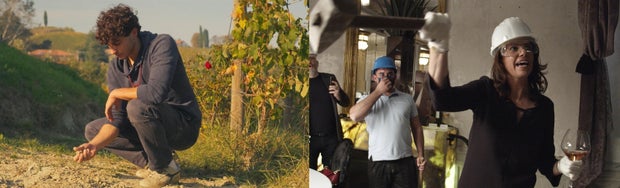
Go inside the kitchen of the Budapest Michelin-starred Onyx, where the personalities of owner and staff clash during a reinvention of the restaurant, in “The Taste of Democracy.”
Traditional family winegrowers in Italy’s Piedmont region face pressure from deep-pocketed foreign buyers to sell off their land, as climate change creates even greater stressors on their annual harvest, in “Low Lies the Land.”
War and Conflict
Ukrainian women bear witness after surviving sexual assault by Russian soldiers in “Traces” (Ukraine’s submission in the best international feature film category for this year’s Oscars). In “Black Sunflowers,” 10 young Ukrainians grapple with the effects of the Russian invasion.
In “For Life,” a Palestinian woman wants a child with her husband, who has been setenced to life in an Israeli prison. “From Gaza With Love” tells the story of a friendhip between a French journalist and a Palestinian photographer.
Following the 1980 U.S. election, thousands of women assembled at the Pentagon to protest policies of war, in “With Love and Rage.”
Sports and Endurance
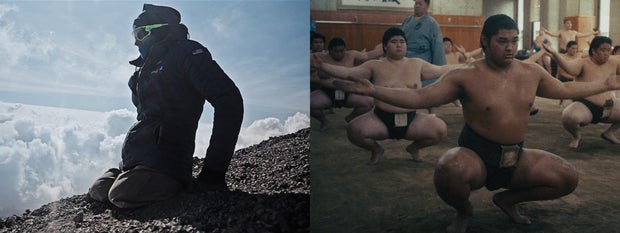
In “The Ascent,” Mandy Horvath climbs Mount Kilimanjaro after having lost both her legs. Young sumo wrestlers train at Tokyo’s Sakaigawa Stable in “Sumo: Spirit Weighs Nothing.”
“Kick” follows American trans nonbinary runner Nikki Hiltz on their road to the Olympics. In rural Turkey, women bond while defying traditional boundaries through their training for a shooting competition in “32 Meters.” The sport of car spinning in Cape Town is captured in “From Dust We Spin.”
Americana
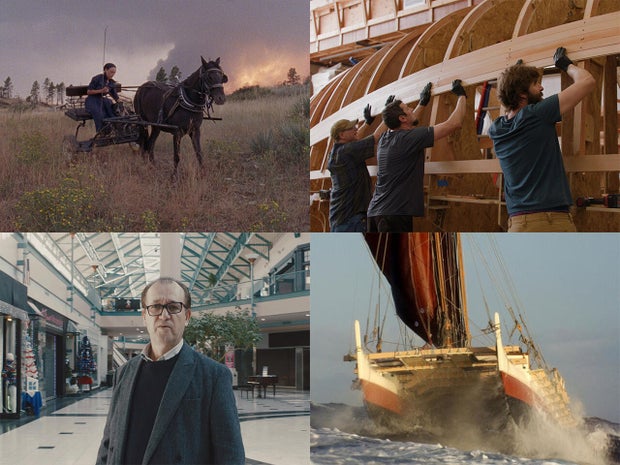
“Ashland” is a meditative look at the people and landscapes of Montana. In a small Maine town, artisans construct a 56-foot sailboat on commission in “Boatbuilders.” Maine lobstermen are the subjects of the cinema vérité “Bucks Harbor.”
“Love Apptually” explores how dating apps have changed the way we find love. In “Baby/Girls,” three teenagers from the Bible Belt face unexpected pregnancies and motherhood.
An Albanian immigrant buys a failing shopping mall in Johnstown, Pennsylvania, and tries to turn it around in “Mall Country.”
Fifty years ago, Native Hawaiian Nainoa Thompson sailed from Hawaii to Tahiti without the aid of modern instruments, the first to do so in 600 years. Now he mentors young navigators to repeat the perilous 2,400-mile journey in “The Navigator.”
In-person screenings will be held at the IFC Center, SVA Theatre, and Village East by Angelika. For information about more entries in their year’s festival, as well as breakdowns of their short film programs, visit the website of DOC NYC.