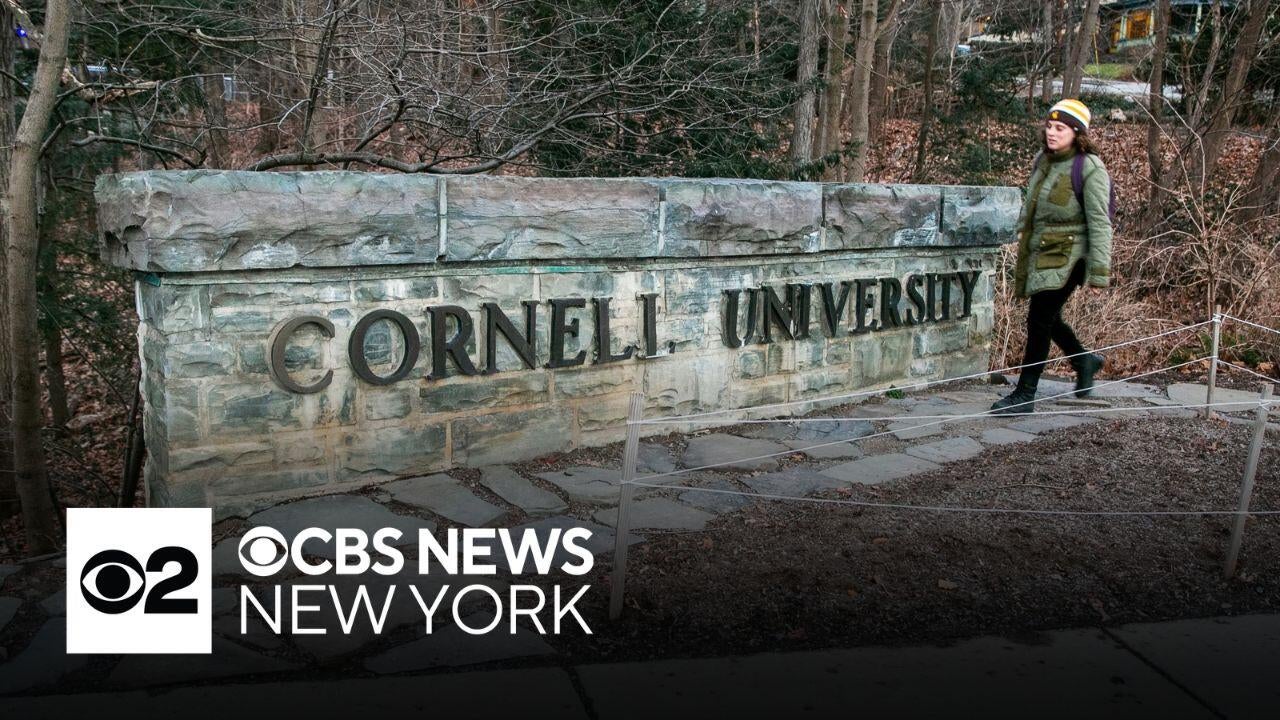
▶ Watch Video: Cornell University Faculty Senate’s “no confidence” vote concludes
Cornell University’s Faculty Senate approved a resolution expressing no confidence in the university’s administration, including Cornell President Michael Kotlikoff and other administrators.
It’s a major rebuke of the university’s leadership.
Members of the faculty told CBS News New York the resolution questioned whether Cornell’s administration can effectively address the ongoing crisis of sexual assault on campus.
The vote, which passed 75-50, is largely symbolic and does not require university leadership to step down. Five faculty senators abstained and five others did not vote.
The vote follows weeks of outrage over Cornell’s handling of sexual assault allegations, including Jane Doe’s 2024 alleged gang rape case. All seven men accused of wrongdoing in her lawsuit deny the allegations.
“This vote is a reckoning for our University. It is a call for real, systemic change; not a slow-moving taskforce, weakly enforced ban on fraternity parties, or expensive PR damage control, but meaningful, evidence-based steps to reduce the incidence of sexual assault on campus and provide significant support to and justice for survivors,” sponsors of the measure said in a statement.
“We believe that the Faculty Senate did not reach this decision lightly and considered all available information,” Doe’s attorney Thomas Giuffra said in a statement. “We are hopeful that this will be yet another step forward to educate the Cornell community by addressing the longstanding scourge of sexual assault on campus.”
“In the 56 years since the establishment of the Faculty Senate at Cornell, the body has never taken such a significant step to condemn the actions of leadership,” Cornell’s chapter of the American Association of University Professors said in a statement. “President Kotlikoff and [Vice President of Student and Campus Life Ryan] Lombardi have failed in their attention to student well-being and accountability. For Cornell to restore good faith and confidence in democratic governance for shaping positive reforms, there must be a change in leadership.”
After the vote, Anne Meinig Smalling, the chair of Cornell’s Board of Trustees, said the board “fully supports” Kotlikoff and his administration.
“Today’s Faculty Senate vote reflects the deep anger across our campus and sends a clear signal that what happened to Jane Doe is unacceptable. There is no place for sexual violence on the Cornell campus. We support President Kotlikoff’s commitment to taking all necessary steps to ensure students are safe on campus and working together as a community to help prevent this from happening again,” Smalling said. “The Board of Trustees remains confident that President Kotlikoff and his administration are the right leaders to thoughtfully and comprehensively address the serious problem of sexual assault on our campus.”
Smalling said Kotlikoff and his administration “have a plan that is focused on strengthening student safety, improving support for survivors, and addressing aspects of our campus culture that must change.”
“The Board fully supports President Kotlikoff and his administration as they continue to listen and act decisively in support of students,” Smalling said.
She said the independent investigation led by former U.S. Deputy Attorney General Sally Yates “will identify what more needs to be fixed.”
Kotlikoff has acknowledged shortcomings in the university’s response and announced new safety measures, including a ban on fraternity parties and an agreement with New York State Police to investigate sexual assault complaints.
The no-confidence measure’s sponsors accused the administration of “repeated attempts to silence us.”
“The faculty have come together to express our discontent and to demand that Cornell do better. We are speaking up for our students, colleagues, staff and alumni who have called on us to hold the administration accountable. From addressing the root causes of rape culture on campus to calling out the ways Title IX has been weaponized against survivors, we will use our collective voice to bring about real change,” the sponsors said. “We’re looking at next steps for concrete change: addressing hazing and fraternity culture; demanding transparency from the administration, including seeing the full Yates report; reforming the Title IX process and sanctions to hold perpetrators accountable; working with outside law enforcement agencies for independent, trauma-informed investigations; and improving support for survivors.
“Now we begin the process of rebuilding our beloved university into what we all know and believe it can be: a place of learning and growth; curiosity and discovery; and safety and belonging.”